Choosing among China’s top Litz Wire manufacturers requires more than comparing catalog prices. The right supplier must understand frequency, current density, insulation requirements, winding space, and thermal limits. A suitable design may contain hundreds of individually insulated copper strands, carefully twisted to reduce skin and proximity effects. Ask how the manufacturer controls strand diameter, lay length, enamel coverage, and termination quality. Small variations can increase losses inside a compact transformer.
Dr. Charles R. Sullivan, a recognized power-electronics researcher, has emphasized, “Litz wire is not a magic solution; it is a tool that must be designed for the application.” That principle should guide every supplier evaluation. Request technical drawings, material certificates, impedance data, and samples from the same production line. Test resistance at operating frequency, not only with a basic multimeter. Examine the finished bundle under magnification. Frayed strands and uneven insulation deserve attention.
A reliable Chinese manufacturer should also explain its process openly. Look for documented quality controls, traceability, sample approval, and experience with transformers, motors, wireless charging systems, or high-frequency inductors. Production capacity matters, but engineering support matters more. A factory may offer an impressive website and still provide weak technical answers. This happens.
Cost should be judged beside efficiency, delivery stability, and failure risk. A cheaper Litz Wire assembly can become expensive after overheating, rewinding, or field returns. Ask difficult questions before signing a purchase agreement. I would also compare at least three suppliers, because one quotation rarely reveals the whole market. The best choice is not always the largest manufacturer. It is the partner that can prove consistent performance under your actual operating conditions.
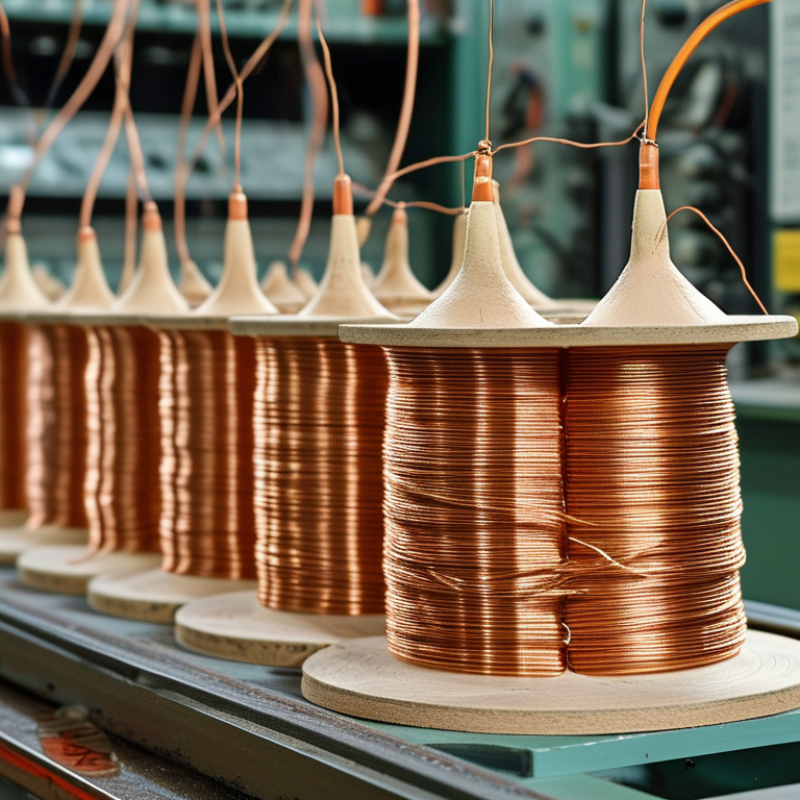
Litz wire is a bundle of individually insulated copper strands, woven or twisted into a controlled pattern. Unlike solid wire, each strand shares the magnetic field more evenly. This reduces skin effect and proximity effect in high-frequency circuits. The result can be lower AC resistance, less heat, and improved winding efficiency. It is not magic, though. At low frequencies, its cost and insulation thickness may offer little benefit.
Demand is rising in power electronics. The International Energy Agency’s Global EV Outlook 2024 projected more than 17 million electric car sales worldwide in 2024. These vehicles use high-frequency transformers, inductors, and charging systems where Litz wire can support compact thermal designs. Industry reports on the wireless power market also identify resonant coils and high-frequency converters as major growth areas. The exact advantage depends on frequency, current, winding space, and cooling conditions.
For buyers comparing China’s top Litz wire manufacturers, request measured AC resistance, strand diameter, twist pitch, insulation grade, and voltage-test results. Ask for samples at the real operating frequency. A wire that performs well at 20 kHz may disappoint at 500 kHz. Higher strand counts are not automatically better. I have seen specifications look impressive until the finished coil showed poor fill factor. Manufacturing consistency matters: uneven twisting, damaged insulation, or excessive soldering difficulty can erase theoretical gains. IEC-related insulation requirements should be checked against the product’s application and target market. Test data should identify methods, instruments, and temperature conditions. Vague claims deserve a second look.
Identifying leading Litz wire manufacturers in China requires more than comparing online prices. A reliable supplier should explain strand count, conductor diameter, insulation type, twisting pitch, and operating temperature clearly. Ask for recent test reports, material certificates, and batch traceability records. Ask for evidence. A serious factory can usually provide production photos, sample data, and quality-control procedures without hesitation. During a factory audit, check winding equipment, cleanliness, storage conditions, and inspection areas. Small details matter, especially when wires serve high-frequency transformers or precision inductive components. A polished website is not enough.
Tips: Request samples from two or three manufacturers. Compare resistance, flexibility, solderability, and insulation consistency. Confirm whether the quoted specification matches the tested sample. Also discuss minimum order quantities, tooling charges, packaging, and delivery capacity before signing an agreement.
Technical communication is another strong indicator. Experienced engineers should answer practical questions about skin effect, frequency range, thermal performance, and custom dimensions. They should also explain possible limitations instead of promising everything. Review how defects are handled, including replacement rules and corrective-action reports. A supplier with stable export experience may offer clearer documentation and safer coordination. Still, buyers can overvalue certificates and overlook daily process control. I would combine document checks, sample testing, and a small trial order before making a long-term decision.
| Evaluation Dimension | What a Leading Manufacturer Should Demonstrate | Practical Benchmark or Required Data | How to Verify Before Ordering |
|---|---|---|---|
| Product Specification Capability | Ability to produce multi-strand insulated wire with controlled strand count, individual wire diameter, insulation type, lay length, and finished outside diameter. | The supplier should provide a complete construction drawing and tolerances for each requested specification, rather than quoting only a nominal finished diameter. | Request a technical datasheet, construction drawing, sample measurement report, and written confirmation of allowable tolerances. |
| Conductor Materials | Clear identification of conductor material, including bare copper, tinned copper, silver-plated copper, or other specified conductor options. | Material designation, conductor resistivity, strand diameter, plating information where applicable, and batch traceability should be stated in the documentation. | Check the material certificate, incoming-material records, conductor resistance results, and independent laboratory test results when required. |
| Electrical Performance | Stable DC resistance, insulation resistance, dielectric strength, and current-carrying performance suitable for the target application. | The quotation should define resistance at a stated reference temperature, test voltage, test method, and acceptance tolerance. Copper resistance values should be temperature-corrected when compared. | Compare the supplier's test method with the applicable customer specification and request production-lot test reports. |
| High-Frequency Suitability | Correct strand insulation and twisting construction to reduce skin-effect and proximity-effect losses in high-frequency applications. | The manufacturer should explain strand diameter selection, operating-frequency range, insulation coverage, and the effect of construction on AC resistance. | Ask for AC-resistance or impedance data at the intended frequency and confirm that the test fixture and frequency are documented. |
| Insulation System | Consistent insulation coverage using a suitable enamel, film, textile serving, or combination system according to thermal and voltage requirements. | The technical file should identify insulation type, thermal class, voltage rating or dielectric requirements, abrasion resistance, and compatibility with soldering or stripping processes. | Review the insulation manufacturer's certificate, thermal-class documentation, pinhole test results, and sample stripping or solderability tests. |
| Thermal Class and Reliability | Products are matched to the temperature environment of transformers, inductors, motors, wireless-power systems, or other equipment. | The supplier should state the applicable thermal class and provide temperature-aging or thermal-endurance evidence when the application requires it. | Verify the declared thermal class against the customer design temperature, hotspot temperature, and applicable wire or component standard. |
| Standards and Compliance | Manufacturing and testing are controlled under a documented quality system, with compliance support for the destination market. | A suitable supplier should be able to provide current quality-system certificates, relevant product test records, and material compliance declarations such as RoHS or REACH where applicable. | Check certificate validity, scope, issuing organization, product coverage, and whether compliance documents apply to the quoted material. |
| Process Control | Controlled drawing, bunching, twisting, insulation, serving, winding, and final inspection processes. | The factory should define process parameters, inspection points, equipment maintenance procedures, nonconformance handling, and lot identification. | Request a quality-control plan, process flow chart, sample inspection records, and a remote or on-site production audit if the order is significant. |
| Dimensional Consistency | Stable finished diameter, lay length, strand alignment, insulation coverage, and spool winding quality throughout a production lot. | The supplier should state sampling frequency, measurement equipment, calibration status, and acceptance limits for critical dimensions. | Measure approval samples with calibrated equipment and compare results from the beginning, middle, and end of a production spool. |
| Sample and Customization Service | Ability to develop samples for non-standard strand counts, dimensions, insulation systems, termination requirements, or special packaging. | A professional quotation should list sample lead time, engineering charges if any, sample quantity, revision control, and the conditions for transferring an approved sample to mass production. | Use a written sample approval procedure and ensure the final purchase order references the approved construction and test requirements. |
| Production Capacity and Lead Time | Capacity is supported by suitable equipment, trained personnel, documented planning, and realistic delivery commitments. | The supplier should provide normal sample lead time, mass-production lead time, minimum order quantity, monthly capacity range, and holiday or peak-season planning assumptions. | Compare the stated lead time with historical delivery records, production schedules, and the supplier's ability to reserve capacity for repeat orders. |
| Packaging and Shipment Protection | Spools are protected against moisture, crushing, contamination, tangling, and insulation damage during storage and international transport. | Packaging specifications should define spool dimensions, winding direction, net length or weight, moisture protection, labeling, and permissible storage conditions. | Approve a packaging sample and inspect spool tension, end protection, labels, carton strength, and export documentation before shipment. |
| Traceability and Documentation | Each shipment can be traced to raw materials, production records, inspection results, and the relevant purchase-order revision. | Labels and certificates should include product code, construction, lot number, production date, quantity, inspection status, and spool identification. | Perform a document-traceability test by selecting one spool and checking whether its material and test records can be retrieved. |
| Technical Communication | Engineering staff can discuss electrical, thermal, mechanical, and manufacturing requirements instead of focusing only on price. | Responses should address ambiguous requirements, identify design risks, propose measurable alternatives, and confirm assumptions in writing. | Send the same technical inquiry to shortlisted suppliers and compare the completeness, accuracy, and consistency of their replies. |
| Total Cost of Ownership | Price is evaluated together with yield, defect rate, delivery reliability, testing, packaging, tooling, and warranty exposure. | A meaningful comparison should include material basis, quotation validity, payment terms, shipping terms, sample costs, tooling charges, replacement policy, and expected scrap risk. | Use a landed-cost comparison and request a clear commercial quotation with no unexplained substitutions or excluded quality requirements. |
| Customer and Application References | Relevant experience exists in the target application, such as high-frequency transformers, inductors, motors, generators, or wireless-power equipment. | References should be relevant to the required construction, operating temperature, frequency, voltage, volume, and export market—not merely general wire experience. | Request anonymized application examples, qualification history, and evidence of repeat production while respecting customer confidentiality. |
| Supplier Selection Result | A leading candidate combines verified technical capability, consistent quality, transparent documentation, reliable delivery, and responsive engineering support. | Recommended after verification Select only after samples pass the agreed tests and commercial, quality, and delivery requirements are documented. | Use a weighted scorecard, complete sample approval, conduct due diligence, and include technical specifications and corrective-action terms in the contract. |
Note: Acceptance limits should be defined according to the application design, customer specification, and applicable international or industry standards.
When choosing a top litz wire manufacturer in China, technical standards should guide the decision. Check whether the product follows relevant IEC, ASTM, or customer-specific requirements. The standard must match the application, not merely appear on a datasheet. For high-frequency transformers, review strand diameter, strand count, insulation type, pitch, and overall construction. These details affect skin-effect losses, flexibility, and winding space.
Ask for measurable product specifications. Important figures include DC resistance, impedance, dielectric strength, temperature rating, outer diameter, and solderability. Request test reports for each production batch when reliability matters. Traceability is valuable. It connects the finished coil to materials, equipment, and inspection records. In practical sourcing, I would also compare sample dimensions with the drawing. Small diameter differences can create serious assembly problems. A low quoted resistance may still mislead if the test temperature is unclear.
Tips: Define test methods before comparing quotations. Confirm frequency, temperature, tolerance, and measurement length. Request samples with the same enamel and serving structure as the intended order. Inspect stripped ends under magnification. Weak bonding or uneven insulation often appears there first. I sometimes underestimate packaging, yet crushed coils can change winding tension and damage insulation. Ask how the manufacturer controls tension, twisting, cleaning, and final electrical testing. Do not accept “customized” as a complete specification. A clear drawing and signed inspection criteria are safer. Mistakes happen. Good documentation makes them visible early.
Choosing China’s top litz wire manufacturers requires more than comparing catalog prices. Quality begins with measurable details: strand diameter, strand count, twist pitch, enamel class, and conductor resistance. IEC 60317 standards help define enamelled wire performance, but buyers should request batch-level test reports. Check insulation breakdown, thermal endurance, solderability, and finished coil dimensions. A clean cross-section matters. Small gaps can increase losses and reduce winding efficiency.
Customization should follow the application, not a generic drawing. Specify operating frequency, current, voltage, temperature, bend radius, and required fill factor. The International Energy Agency’s Energy Efficiency 2023 report identifies motor-driven systems as a major global electricity demand area, increasing pressure for efficient high-frequency designs. Ask manufacturers for prototypes, process control records, and engineering feedback. I once viewed strand count as the key specification. That was incomplete. Twist consistency and insulation uniformity can matter more.
Pricing needs a total-cost comparison. Include tooling, sample charges, copper-index adjustments, testing, packaging, and expected scrap. The U.S. Department of Energy’s 2022 Motor System Market Assessment highlights the high energy impact of motor systems, making efficiency losses expensive over time. Lead time also deserves evidence. Request raw-material availability, production capacity, inspection timing, and a realistic shipping window. A low quotation is not useful if samples arrive late or production lacks traceability. Ask for milestones in writing. Then verify them with a small trial order.
Before choosing a litz wire supplier, ask questions that expose process control, not just price. What operating frequency, current, insulation class, and bend radius will the wire face? Can the supplier show strand diameter, strand count, twist pitch, coating material, and finished resistance records? These details matter because skin and proximity effects increase with frequency. Grand View Research identifies automotive systems, industrial electronics, and telecommunications as major litz wire application areas. Each application needs different construction. Start with evidence.
Ask for independent test reports and the exact standards used. Do they test against applicable IEC 60317 requirements? Can they provide thermal-aging, voltage-withstand, pinhole, solderability, and dimensional results? Request batch traceability from copper rod to shipment. A certificate alone is thin evidence. The International Energy Agency reported that global electric car sales exceeded 17 million in 2024. Its Electricity 2024 report also projected average global electricity-demand growth of 3.3% through 2026. These trends increase pressure on compact, efficient windings, but they do not excuse weak verification.
Ask how samples become mass production. What are the minimum order, normal lead time, monthly capacity, and rejection rate? Can the supplier repeat the sample’s electrical and mechanical results? Inspect a cut cross-section; uneven winding, loose strands, or damaged film can appear immediately. I would also ask how complaints are handled, including response times and corrective-action records. Cheap is tempting. It can become expensive later. No supplier is perfect, and a confident answer is not proof; compare documents, samples, and process reviews.
: It contains many individually insulated copper strands, twisted or woven together. It is not magic. Its design can reduce high-frequency losses and heat.
It helps reduce skin effect and proximity effect. This can lower AC resistance in transformers, inductors, and resonant coils. The actual benefit depends on frequency, current, cooling, and winding space.
No. At low frequencies, its extra insulation and cost may provide little value. A wire tested at 20 kHz may perform differently at 500 kHz.
Request strand diameter, strand count, twist pitch, insulation grade, and resistance data. Also request voltage-test results and operating-temperature limits. Ask for test methods, instruments, and temperature conditions.
Ask for recent test reports, material certificates, and batch traceability records. Check production equipment, storage areas, cleanliness, and inspection procedures. A polished website is not enough.
Not automatically. More strands may increase cost and reduce winding space. Twist consistency, insulation uniformity, and finished-coil fill factor also matter. I once overvalued strand count. That judgment was incomplete.
Provide operating frequency, current, voltage, temperature, bend radius, and fill-factor requirements. Ask for prototypes and engineering feedback. A generic drawing may hide important thermal or winding problems.
Compare total cost, including tooling, samples, testing, packaging, copper adjustments, and expected scrap. Request raw-material availability, production capacity, inspection timing, and shipping milestones. A low price is useless if samples arrive late.
Request samples from two or three suppliers. Compare resistance, flexibility, solderability, insulation consistency, and winding results. Test samples at the real operating frequency. Use a small trial order before long-term purchasing.
Choosing the right China-based Litz Wire manufacturer requires more than comparing prices. Litz Wire is made from multiple individually insulated strands woven or twisted together to reduce skin and proximity effects, making it valuable in high-frequency transformers, inductors, wireless power systems, and other efficient electrical applications. A reliable manufacturer should demonstrate technical expertise, stable production capacity, consistent quality control, and experience with customized designs.
When evaluating suppliers, review relevant technical standards, strand diameter, insulation type, wire construction, frequency range, temperature rating, voltage requirements, and test procedures. Compare product quality, customization capability, minimum order quantities, pricing transparency, production lead times, packaging, and after-sales support. Before making a decision, ask about material traceability, sample approval, inspection reports, delivery schedules, and how the supplier handles design changes or quality concerns. A clear evaluation process helps ensure the selected manufacturer can provide dependable performance, competitive value, and long-term supply stability.

Lucky Pioneer