Global demand for reliable electrical insulation is reshaping supplier selection. Mylar Covered Wire combines copper or aluminum conductors with a thin polyester-film layer. That layer must resist abrasion, heat, moisture, and repeated bending.
Grand View Research’s polyester films analysis identifies electrical and electronics uses as important demand drivers. MarketsandMarkets also tracks rising requirements for insulated wires, cables, and compact power systems. These reports offer useful market direction. They do not isolate Mylar Covered Wire perfectly. Buyers should treat broad polyester-film figures as indicators, not final purchasing proof.
The technical question is simple. Is the insulation suitable?
Professor E. Kuffel, a recognized electrical-insulation authority, emphasized, “Insulation must be designed for the stresses imposed upon it.” This principle remains practical when comparing global suppliers. A bright, smooth sample may still fail during winding. A thicker film may improve protection, yet reduce flexibility inside a tight coil. Small details matter, including film overlap, adhesion, conductor tolerance, and tested breakdown voltage.
This guide reviews the 2026 supplier landscape through a buyer’s lens. It considers manufacturing experience, quality systems, test documentation, production capacity, customization, and export reliability. Supplier claims require verification. That part is often overlooked.
The strongest manufacturers can provide traceable batch records, thermal-class information, dimensional reports, and samples tested under realistic conditions. They should also explain storage limits and handling risks. Those conversations reveal expertise quickly.
Some market rankings remain imperfect because supplier data changes frequently. That is worth admitting. Global buyers should compare evidence, not polished brochures. The right Mylar Covered Wire supplier is not merely the cheapest option. It is the partner whose material performs consistently inside the finished product.
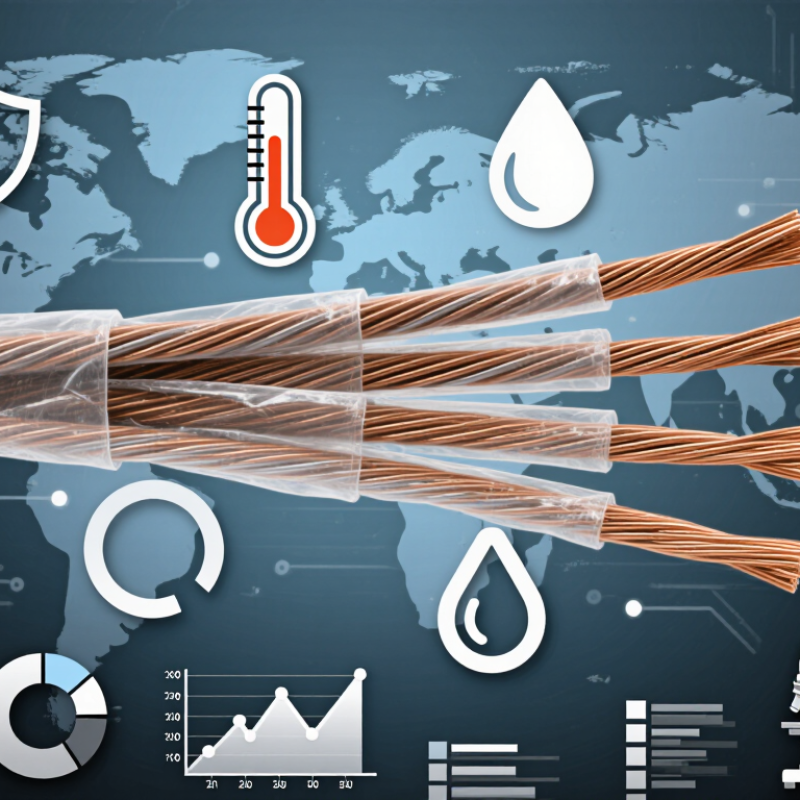
Mylar-covered wire is an electrical conductor wrapped with a thin polyester film. The copper or aluminum core carries current. The Mylar layer provides insulation, mechanical protection, and separation between adjacent windings. It is often used in transformers, motors, coils, sensors, and compact control equipment.
This covering matters because space inside electrical assemblies is limited. A smooth film helps wires sit closely without direct contact. It can reduce abrasion during winding and support cleaner layer construction. Mylar also offers stable dielectric performance across many everyday operating conditions. In practical sourcing, buyers should check conductor size, film thickness, temperature rating, voltage requirements, flexibility, and resistance to solvents or moisture.
Specifications need context. A wire rated for heat may still perform poorly under repeated bending. A thinner covering can save space, but it may provide less mechanical tolerance. I have seen purchasing teams focus on price while overlooking winding tension and storage conditions. That mistake can create damaged insulation before installation. Ask for test data, dimensional tolerances, sample approval, and traceable production records. Supplier experience also matters, especially when the wire must meet a consistent winding process. Standards can guide evaluation, but they do not replace application testing. A careful buyer should compare real samples, not only catalog figures. Small details matter.
| Supplier Evaluation Dimension | Typical Technical Fact or Requirement | Why It Matters to Global Buyers | Recommended Verification Document |
|---|---|---|---|
| Basic product definition | Mylar is a commonly used trade name for biaxially oriented polyethylene terephthalate (PET) film. Mylar-covered wire uses PET film as an electrical insulation or protective covering around a conductive core. | It distinguishes PET-film-covered wire from enamelled wire, PVC-insulated wire, PTFE wire, and other constructions. | Construction drawing, material declaration, and insulation cross-section report. |
| Conductor material | Common conductor options include annealed copper, tinned copper, bare copper, and aluminium. Copper provides higher conductivity than aluminium at the same cross-sectional area. | Conductor selection affects voltage drop, current capacity, weight, solderability, and total landed cost. | Conductor chemistry certificate, resistance report, and material certificate. |
| Conductor size | Wire may be specified by diameter, cross-sectional area in mm², or an applicable gauge system. The nominal size should be stated before insulation is applied. | A clear size definition prevents confusion between conductor diameter and finished outside diameter. | Dimensional inspection report and technical drawing with tolerance limits. |
| PET film thickness | PET insulation thickness is application-specific and is normally selected according to dielectric requirements, flexibility, winding space, and required finished diameter. | Thicker film can improve insulation robustness but increases outside diameter and may reduce packing density. | Film thickness measurement, wrapping construction specification, and finished-diameter report. |
| Wrapping construction | Typical constructions include longitudinal wrapping, spiral wrapping, or multiple film layers. Overlap percentage and seam arrangement must be defined in the purchase specification. | The wrapping method affects coverage continuity, flexibility, stripping behavior, and dielectric reliability. | Process specification, cross-sectional photographs, and sampling inspection records. |
| Temperature capability | PET film has a melting range commonly reported near 250–260 °C, but the allowable continuous operating temperature of a covered-wire construction depends on the complete insulation system, mechanical stress, and ageing conditions. | A film melting point must not be treated as the product’s operating temperature rating. | Supplier temperature rating, thermal-ageing data, and applicable insulation-system recognition. |
| Dielectric performance | The finished wire should be qualified by a dielectric withstand or insulation resistance test at the voltage, duration, and test environment specified by the buyer. | Breakdown performance depends on film thickness, overlap, defects, conductor surface, and test method—not film material alone. | Routine high-voltage test report and test-method description, such as ASTM D149 where applicable. |
| Insulation resistance | The required insulation-resistance value should be specified with the test voltage, conductor length, temperature, humidity, and acceptance limit. | Standardized test conditions make quotations and supplier comparisons meaningful across countries. | Insulation-resistance test report with environmental conditions and sampling plan. |
| Flexibility and bend performance | Required bend radius, mandrel diameter, winding tension, and number of flex cycles should be defined for the intended application. | PET film can provide good mechanical protection, but excessive bending or sharp forming can damage film coverage. | Flexibility test results, bend-test method, and application-specific validation sample. |
| Finished outside diameter | The finished diameter equals the conductor diameter plus the insulation build and manufacturing tolerance. It should be controlled over the full shipment length. | Outside diameter affects coil fill factor, terminal fit, automated winding, and cable routing. | In-line diameter records and final inspection report with minimum, nominal, and maximum values. |
| Electrical resistance | Resistance should be stated in ohms per kilometre or another agreed unit at a defined reference temperature, commonly 20 °C for conductor comparisons. | Copper resistance increases with temperature, so both reference-temperature resistance and operating conditions are important. | Four-wire resistance measurement report and conductor-size verification. |
| Flame and chemical requirements | PET film is not automatically flame-retardant, halogen-free, oil-resistant, or solvent-resistant. These properties require a specific construction and test evidence. | Material assumptions can create compliance or field-failure risks in transportation, industrial, and energy equipment. | Flammability, chemical compatibility, and restricted-substance declarations relevant to the destination market. |
| RoHS and REACH documentation | For applicable markets, buyers should request declarations covering restricted substances and substances of very high concern in accordance with current regulatory requirements. | Documented material compliance supports customs clearance, customer audits, and product-market access. | Current supplier declaration, material composition statement, and laboratory test report when required. |
| Quality-management system | An ISO 9001-certified quality-management system provides evidence of documented processes, corrective action, and continual improvement; certification does not by itself guarantee product suitability. | Process control and traceability reduce variation between production lots. | Valid certificate issued by an accredited certification body and recent audit summary. |
| Traceability | Each spool or batch should be linked to conductor lot, PET film lot, production date, operator or line record, and inspection results. | Traceability enables targeted recalls, root-cause analysis, and reliable incoming inspection. | Batch certificate, spool label format, and sample traceability record. |
| Packaging and shipping | Wire should be protected from moisture, contamination, crushing, excessive tension, and flange damage during storage and international transport. | Good packaging protects insulation integrity and reduces damage claims after long-distance shipment. | Packaging specification, spool drawing, gross/net weight data, and shipping inspection photographs. |
| Sample and pre-production approval | A representative sample should be tested for dimensions, resistance, insulation continuity, dielectric withstand, winding performance, and application-specific compatibility before mass production. | Sample approval converts a general quotation into a controlled technical agreement. | Approved sample record, inspection plan, signed technical specification, and first-article report. |
Note: Technical values and compliance requirements are construction- and market-dependent. Buyers should confirm the final rating, test method, tolerance, and certification status against the supplier’s current datasheet and the applicable destination-market requirements.
Request dielectric breakdown results, insulation thickness tolerance, adhesion data, and pinhole-control records. Inspect samples under winding tension. Test it.
No certification guarantees every batch. Ask for recent batch certificates and retained samples. Process records help, but direct testing remains necessary.
Compare conductor weight, film grade, covering percentage, minimum order quantity, tooling, freight, and payment terms. A low quote may hide thinner insulation.
Calculate rejected coils, replenishment delays, inspection fees, and transport charges. A cheaper offer can become expensive after failure. Price alone misleads.
Separate sample delivery, first production, and repeat orders. Ask whether materials are stocked or purchased after confirmation. Request a written production schedule.
Confirm customs classification, origin, net weight, packaging details, and destination certification requirements. Request technical documents before issuing a purchase order.
Check diameter, adhesion, flexibility, edge coverage, dielectric strength, and winding performance. Independent sampling is sensible for valuable shipments. Small defects matter.
Ask about nonconforming coils, retesting, replacement, corrective actions, and change control. Request realistic capacity information and production photographs. Polished paperwork is not proof.
Moisture protection matters during ocean transport. Inspect pallets, wrapping, seals, and storage conditions. One wet pallet can damage otherwise acceptable insulation.
Yes, it can reveal production quality, communication gaps, packaging weaknesses, and actual lead times. I would still review the results critically.
Mylar Covered Wire is an insulated conductor valued for its strong dielectric performance, flexibility, moisture resistance, and reliable protection in demanding electrical and electronic applications. For global buyers, selecting the right supplier requires more than comparing product descriptions. Important evaluation points include conductor material, wire gauge, insulation thickness, temperature rating, voltage capability, dimensional consistency, adhesion, bend performance, and production capacity. A dependable supplier should also provide clear technical documentation, consistent quality control, traceability, and certifications relevant to the intended market.
This 2026 buyer’s guide explains how to compare leading Mylar Covered Wire suppliers based on quality, pricing, customization options, certifications, minimum order quantities, and lead times. It also highlights practical considerations for international sourcing, including sample approval, packaging, shipping terms, customs documentation, pre-shipment inspection, and communication efficiency. By reviewing these factors systematically, purchasing teams can reduce supply risks, verify product suitability, and build stable long-term partnerships with suppliers capable of meeting technical and delivery requirements.

 Lucky Pioneer